Introduction
Welcome to Spindrift
Spindrift is a large-group, play-by-post style roleplaying gameof politics, relationships, ambition, and intrigue, set within a living fantasy kingdom beneath the sea.
Rather than gathering a small party for a single adventure, many players inhabit the same persistent world at once. They take the roles of nobles, courtiers, knights, clergy, merchants, officials, and other people whose lives are intertwined with the Kingdom of Léoneth. Play is primarily asynchronous: players write scenes and conversations, exchange correspondence, pursue relationships, make political decisions, and submit Deeds describing what their characters choose to do. Players participate as their schedules allow, while the GM works through and resolves those Deeds as the GM's own schedule allows.
Time continues to pass. Characters travel, Houses rise and fall, Factions pursue their interests, relationships change, and decisions become history. There is no single adventuring party, no single protagonist, and no predetermined story everyone is expected to follow.
01
A Realm of Intrigue
In Spindrift, much of play happens between people.
A friendship can become an alliance. A marriage can bind two Houses together. A religious dispute can become a political crisis. A merchant's agreement can alter the fortunes of a harbor. An insult at court may be remembered years later.
Characters negotiate alliances, pursue offices, defend institutions, cultivate friendships, arrange marriages, settle rivalries, manage estates, uncover secrets, advance causes, and attempt plans whose consequences may reach far beyond themselves.
Some of these stories unfold through roleplayed conversations. Others through letters, public declarations, political maneuvering, or the Deeds characters undertake during each passing month.
Your character has a story. But their story belongs to a larger history.
02
A Realm Beneath the Waves
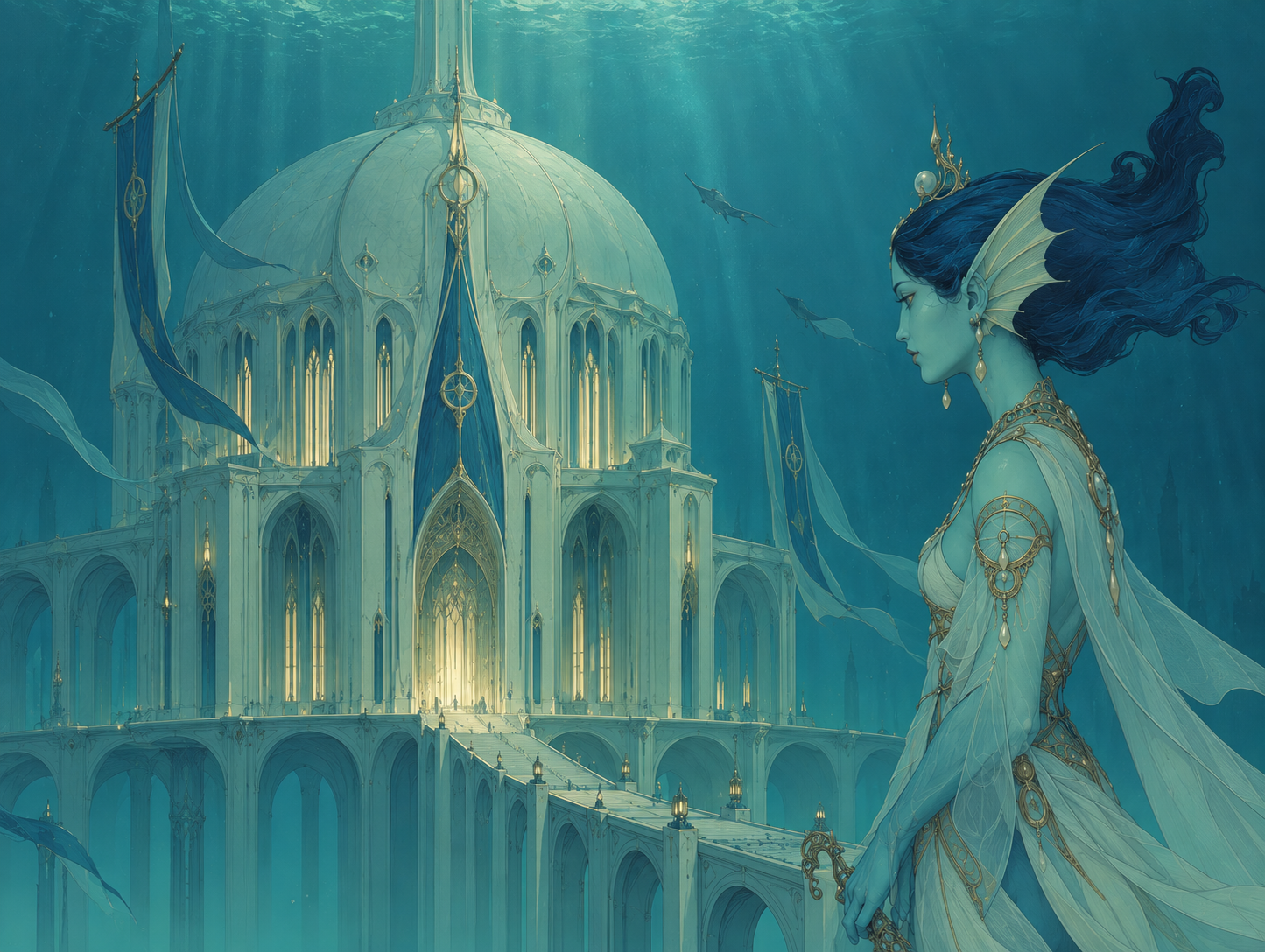
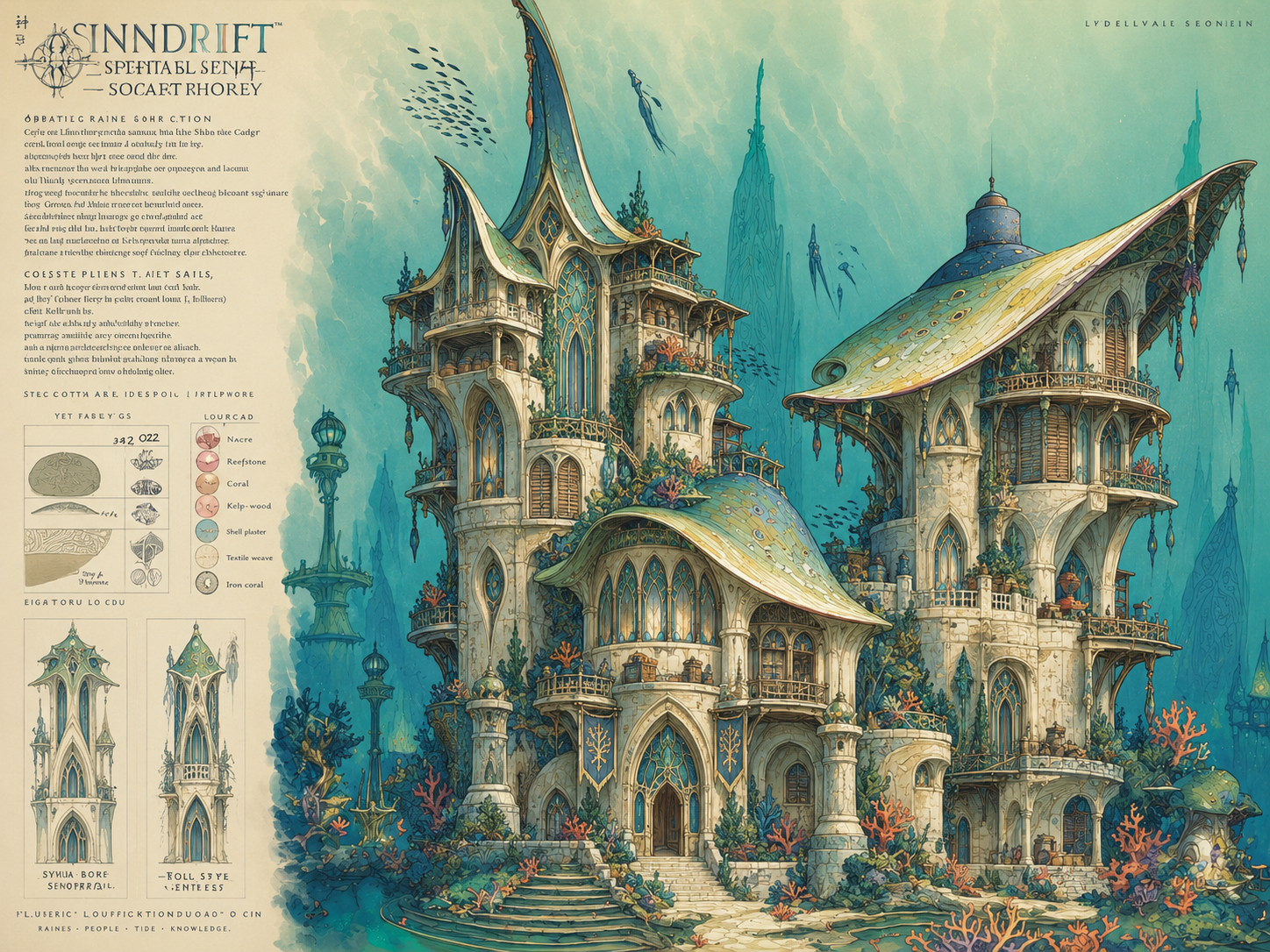
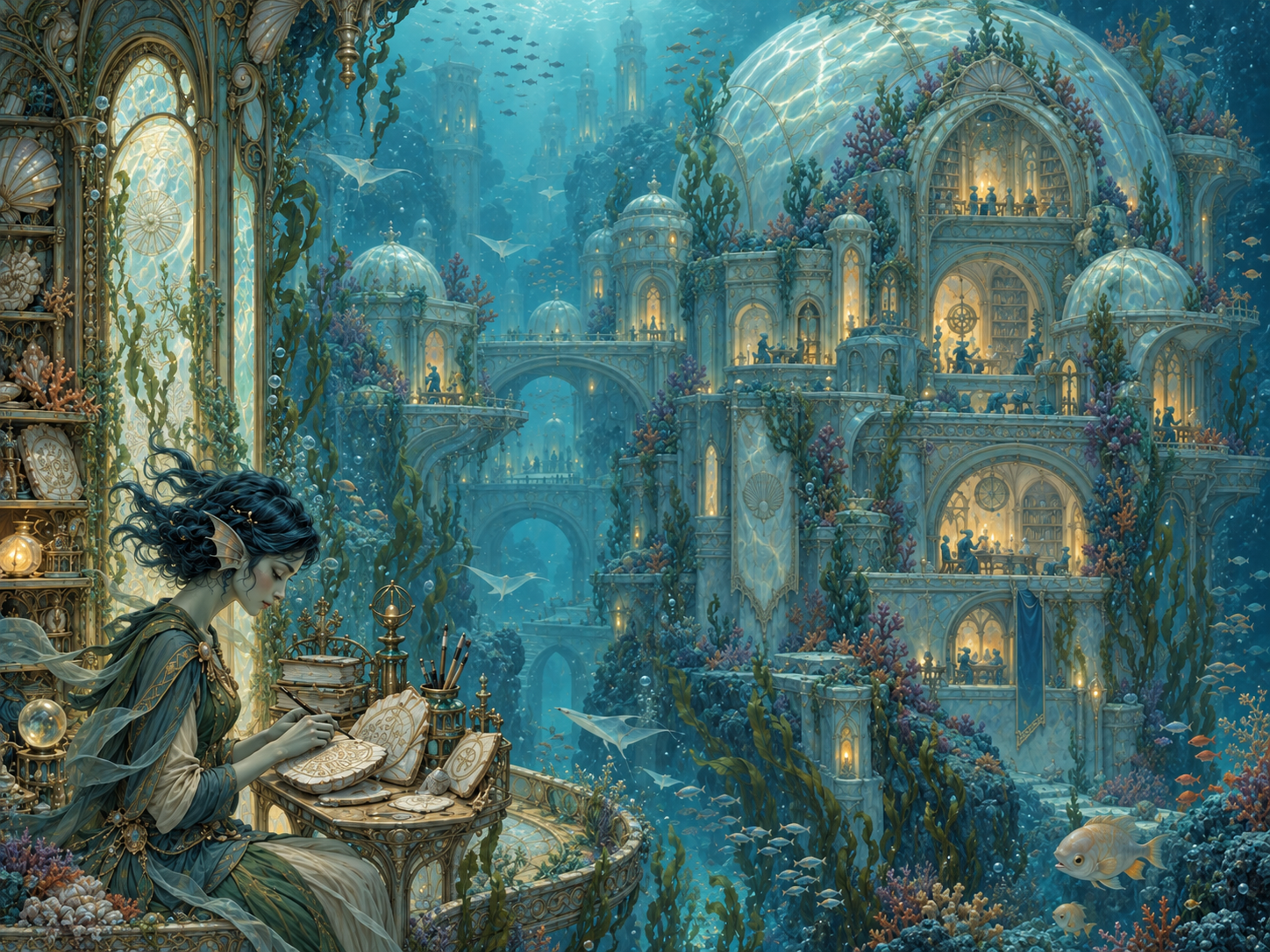
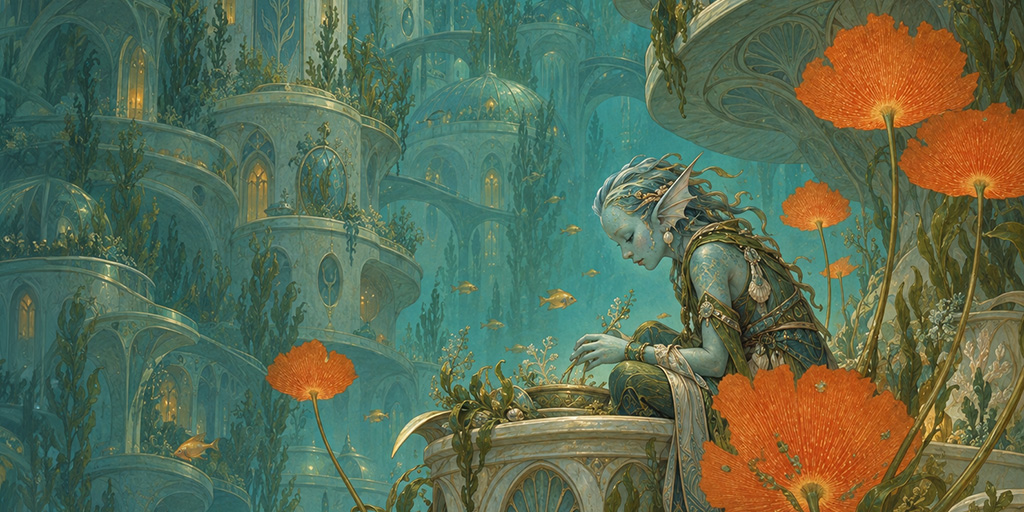
Beneath the shifting light of the Léoneid Sea lie fortresses raised from coral reefs, ancient roads winding through forests of kelp, and knights riding hippocampi beneath streaming banners.
Pearl-lit estates overlook prosperous harbors. Temples preserve old rites. Merchant vessels cross dangerous waters between settlements, while beyond the well-traveled reef roads lie wrecks, ruins, forgotten sanctuaries, and the darkness of the open deep.
At the heart of Spindrift lies Léoneth: a kingdom of ancient families, knightly orders, competing faiths, ambitious guilds, local traditions, and a Crown attempting to hold them all together.
It is an old and cultivated society, beautiful in places and troubled in others. Every House has a memory. Every institution has interests. Every friendship, feud, promise, and obligation already belongs to a history that began long before any one character entered it.
Every new ambition places pressure upon something already there.
03
How Play Works
Spindrift moves according to a shared calendar, but it is designed to accommodate the schedules of both players and the GM.
Four Deeds Each Month
Each real-world week advances Léoneth by one in-game month. During that month, each character has four Deeds with which to act upon the world.
Meaningful Choices
A Deed may be used to travel, send correspondence, meet someone, investigate, influence, acquire, prepare, recover, pursue a relationship, or attempt something entirely unexpected.
Distance Matters
Sending correspondence is a Deed. Travel is a Deed, and sufficiently long journeys may require more than one. Characters cannot be everywhere or pursue every possibility at once.
Asynchronous Resolution
Players submit Deeds as their schedules allow. The GM works through and resolves them as the GM's schedule allows, collaborating with the player when resistance, uncertainty, or competing intentions complicate the outcome.
04
Characters, Houses, and Factions
No character in Spindrift exists entirely alone. Every character belongs to a Noble House, and many also belong to one or moreFactions: faiths, knightly orders, guilds, political institutions, associations, or other organized bodies.
Characters, Houses, and Factions are all understood through the same five interconnected ideas.
Traits
How do you tend to act?
Temperament, values, habits, instincts, virtues, and flaws.Bonds
Who matters to you?
Friendship, kinship, love, loyalty, faith, rivalry, obligation, and allegiance.Capabilities
What are you able to do?
Training, experience, resources, knowledge, and practical strengths.Prestige
How much weight does your name carry?
Reputation, standing, authority, accomplishment, and influence.History
What has happened to you?
Victories, failures, scandals, losses, achievements, and transformations.These ideas describe people, but also the Houses and Factions that outlive them. Institutions have personalities, relationships, strengths, reputations, and histories of their own.
Houses & Factions Also Track
Holdings
Land, estates, buildings, workshops, temples, docks, and other places they control.
Personnel
Troops, retainers, workers, clergy, agents, specialists, and organized labor.
Assets
Pearls, trade goods, vessels, equipment, stores, and other movable wealth.
05
The World Does Not Wait
Léoneth is more than the sum of its player characters.
Weather changes. NPCs pursue their own ambitions. Factions advance their interests. Opportunities appear and disappear. Rumors travel. Conflicts deepen. Markets shift. Storms arrive.
People fall in love, make enemies, gain offices, lose fortunes, inherit responsibilities, and make decisions no player asked them to make.
Players are not expected to respond to everything. They choose what matters to their characters and accept that while they pursue one ambition, something else may change without them.
That is what makes the kingdom feel alive.
You decide what this world becomes.
Continue Exploring